
Introduction: The Drain Problem Every Beginner Can Fix
Water pooling around your ankles in the shower, a bathroom sink that drains slower every week, a kitchen sink that gurgles and backs up. Most household clogs are small, close to the drain, and made of ordinary things: hair, soap scum, grease, and food particles. You do not need a bottle of caustic chemicals to clear them.
Learning how to unclog a drain without chemicals is one of the most useful beginner DIY skills. The methods are cheap, the tools are simple, and chemical-free methods protect your pipes, your skin, and the water that leaves your home. Work through the methods in order, from gentlest to strongest, and most clogs clear before you reach the end of the list. This guide is written for renters and first-time homeowners, and it is educational only, not professional advice.
Why Skip the Chemical Drain Cleaner
Chemical drain cleaners promise a fast fix, but they come with real downsides. The caustic formulas generate heat inside the pipe, which can warp plastic PVC pipes, corrode older metal pipes, and damage chrome finishes and seals. If the cleaner fails to clear the clog, it leaves a pool of corrosive liquid sitting in your drain, which is dangerous for anyone who works on it next, and a splash can burn skin and eyes.
Chemical cleaners are also rough on septic systems and unpleasant to handle. For the most common household clogs, mechanical methods like plunging and snaking clear the blockage itself, instead of partly dissolving it and leaving the rest behind. Enzyme-based drain cleaners, which use bacteria to break down organic matter slowly, are a gentler option for maintenance, but for an active clog, the methods below work better, cost less, and leave your pipes intact.
First, Figure Out What Kind of Clog You Have
A quick diagnosis saves time, because different clogs respond to different methods.
A slow drain that still empties, usually in a bathroom sink or shower, is most often hair and soap scum near the opening. These respond well to removing debris, plunging, and baking soda and vinegar.
A kitchen sink that drains slowly or smells greasy usually has a grease clog. Grease cools and hardens inside pipes, catching food particles as it builds. Hot water and dish soap are the right first move, because they dissolve grease rather than pushing it around.
A drain that suddenly stops completely is often a solid blockage: a wad of hair, a dropped object, or a buildup that finally closed off. Plunging and a drain snake are the right tools for these.
Several drains clogging at once, water backing up into another fixture, or a bad sewer smell throughout the house usually means a deeper main-line problem. That is not a beginner job. Stop and call a plumber, because the wrong tool can push the blockage deeper or damage the pipe.
Tools and Materials You Will Need
Most of these are already in your home.
- A cup plunger, the simple rubber cup kind, not a flange toilet plunger, for sinks and tubs
- Baking soda and white vinegar
- Dish soap, the regular liquid kind
- A kettle or large pot for boiling water
- A plastic drain stick or zip tool, a cheap barbed plastic strip for pulling out hair
- A hand drain snake, also called a hand auger, for deeper clogs
- A bucket, old towels, rubber gloves, and safety glasses
- A drain strainer, to prevent the next clog
- An old toothbrush and a rag for cleaning the drain opening
Buy the drain snake only if the earlier methods fail; many clogs clear without it. A small hand auger costs little and lasts for years. Avoid a wire coat hanger as a substitute: it can scratch porcelain and push a clog deeper instead of pulling it out.
Safety Before You Start
Drain work is low risk when you respect what may be in the pipe. Wear rubber gloves and safety glasses, lay towels around the work area, and keep a bucket nearby for water that comes up.
Never pour boiling water into a toilet or onto a cold porcelain fixture, because sudden heat can crack porcelain. Boiling water is for metal and PVC sink and tub drains only, poured in stages rather than all at once. If your pipes are very old or you are unsure of the material, use hot tap water instead.
If you have already poured a chemical cleaner down this drain, stop. Do not plunge, add vinegar, or reach in: chemical splashes are a real injury risk. Ventilate the room and call a professional. If you rent, check your lease: some repairs are the landlord’s responsibility, not yours.
Method 1: Remove Visible Debris and Clean the Drain Opening
Start with the simplest step: many slow drains are clogged right at the surface. Pull out the drain stopper or strainer and look inside. Hair, soap, and gunk collect just below the opening, within easy reach.
Use the plastic drain stick for bathroom drains: push it gently into the drain, twist slightly, and pull it out slowly. Wipe the debris into the trash, not back down the drain, and repeat until the stick comes out clean.
Clean the stopper and strainer with an old toothbrush and hot soapy water before putting them back. Run the tap and check the flow. If the drain now runs freely, you are done, and a strainer left in place will catch the next round of hair before it becomes a clog.
Method 2: Boiling Water for Grease and Soap Clogs
Boiling water is the easiest method for kitchen sinks and tubs where grease or soap scum is the problem. Heat a full kettle or pot of water to a rolling boil. Pour it slowly down the drain in two or three stages, waiting a few seconds between pours so the heat has time to work on the grease.
Hot water melts fat deposits and loosens soap scum, and the flow carries them away. Test the drain after the first kettle. If it improves but is still slow, repeat once with a second kettle. Do not use this method on a toilet, or if you have already poured a chemical cleaner down the drain.
If boiling water alone does not clear it, move on to dish soap rather than repeating it.
Method 3: Dish Soap and Hot Water for Grease Clogs
Dish soap is designed to cut grease, which makes it the perfect tool for a greasy kitchen clog. Squirt a generous amount of regular liquid dish soap directly down the drain, enough to coat the inside of the pipe. Let it sit for a few minutes so it can reach the grease.
Then pour a kettle of hot, not necessarily boiling, water down the drain in stages. The soap loosens the grease, and the hot water carries it away. Run the hot tap for a minute afterward to flush the line.
This method is gentle and cheap, and works well on greasy kitchen sinks. It will not clear a solid hair clog in a bathroom, so if nothing changes after two attempts, switch to plunging.
Method 4: Plunge the Drain Properly
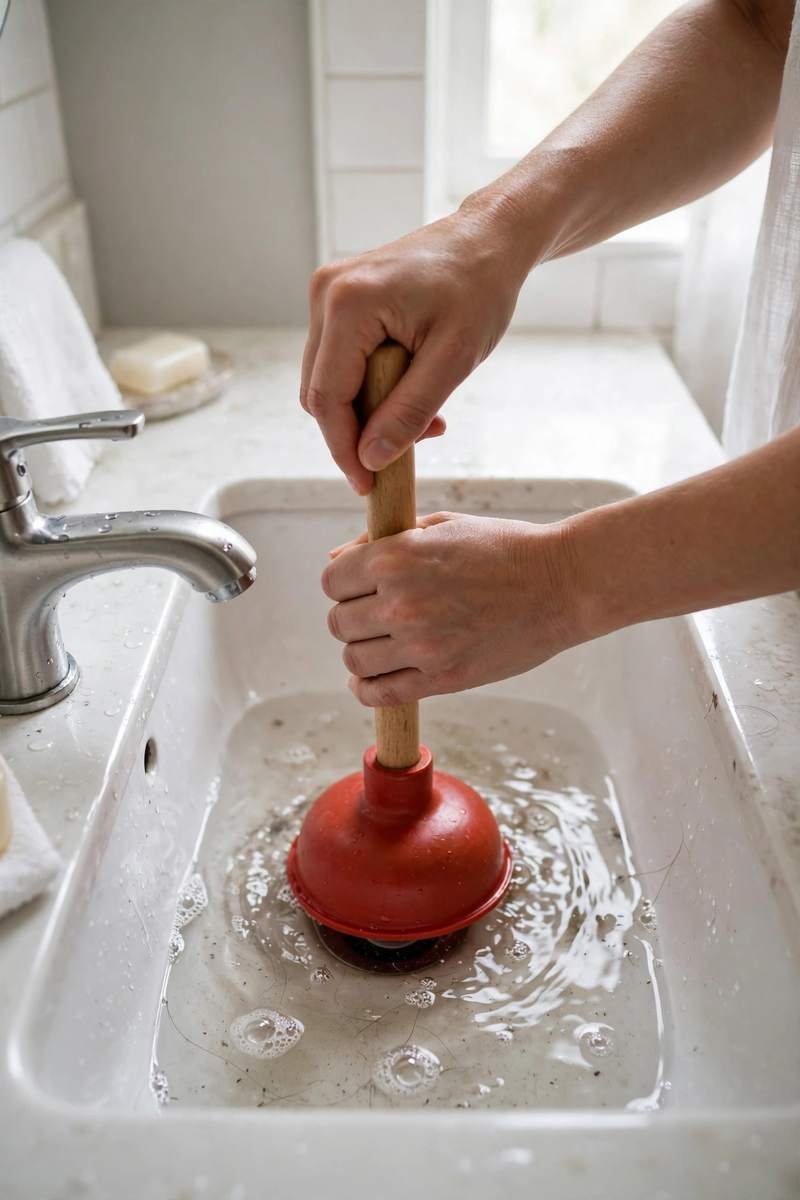
Plunging works by pressure: the plunger pushes water against the clog and pulls it back until it breaks apart or moves. Technique matters more than strength.
For a sink or tub, use a cup plunger, not a toilet plunger. If the sink has an overflow hole, block it with a wet rag so pressure goes to the clog instead of escaping through the overflow. Run enough water to cover the bottom of the plunger cup, place the cup flat over the drain so it seals completely, and pump up and down firmly for about 20 seconds. Then pull the plunger up sharply to break the seal.
Check the flow; if the water drains faster, repeat until it runs freely. If plunging changes nothing after several attempts, the clog is probably further down the pipe or too solid for pressure alone, and it is time for the baking soda and vinegar method or the drain snake. For a bathtub, remove the stopper first and keep towels nearby; dirty water coming up means the clog is moving.
Method 5: Baking Soda and Vinegar
Baking soda and vinegar are the classic chemical-free combination, best on bathroom drains with soap scum and light buildup. Pour one cup of baking soda down the drain, then one cup of white vinegar. Cover the drain with a plug or a damp cloth so the fizzing reaction pushes downward into the clog instead of bubbling up out of the drain. Let the mixture sit for 15 to 30 minutes, then flush with a kettle of hot water, poured in stages. Repeat once if the drain improves but is still slow.
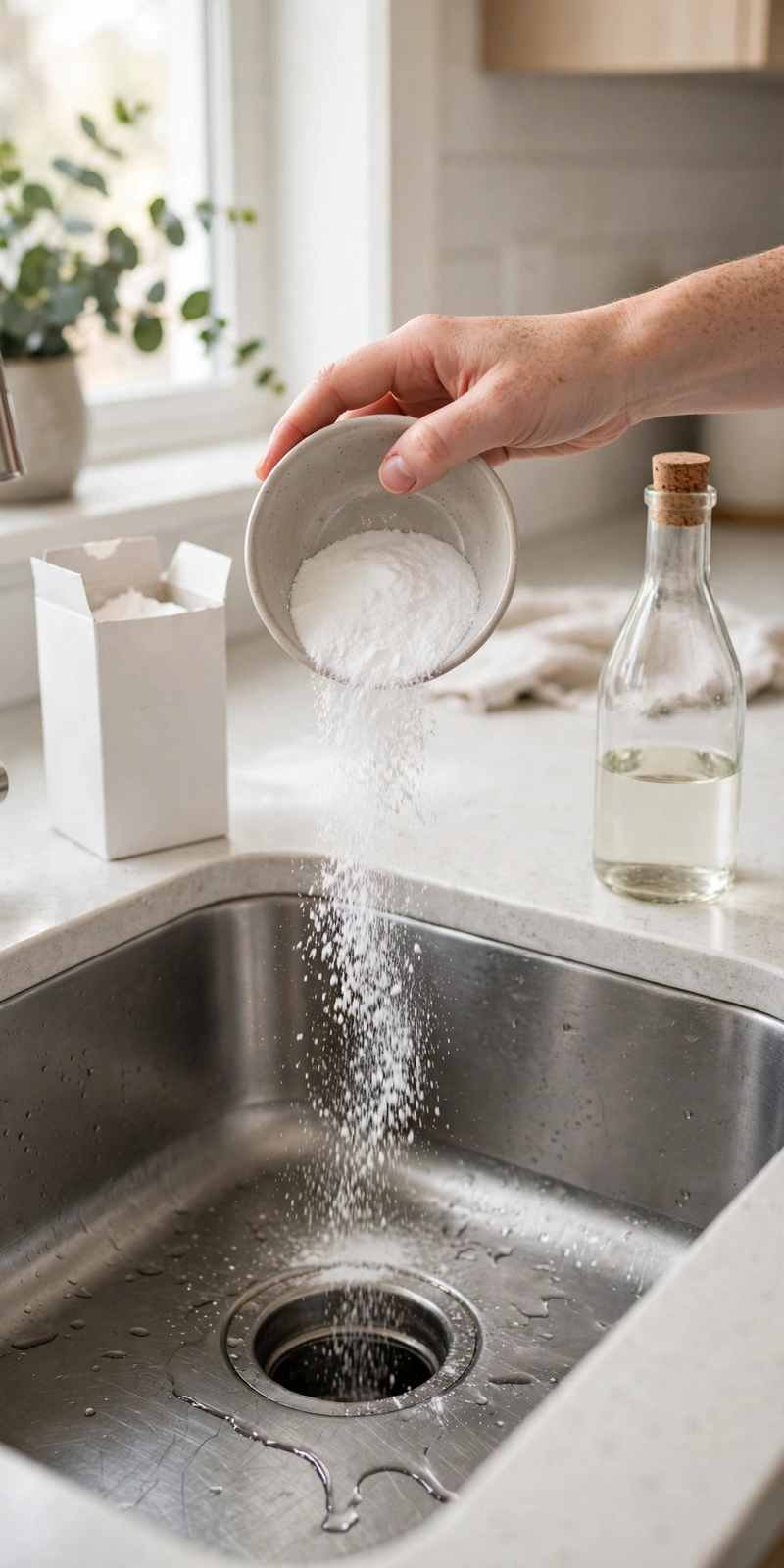
Be honest about what this method can and cannot do. It will not dissolve a solid wad of hair or a large grease blockage on its own. If the drain is completely blocked and standing water will not move at all, skip this method and go straight to the drain snake.
Method 6: Use a Drain Snake for Stubborn Clogs
A hand drain snake is a flexible metal cable that reaches past the drain opening and physically breaks up or pulls out the clog. It clears most clogs the earlier methods cannot.
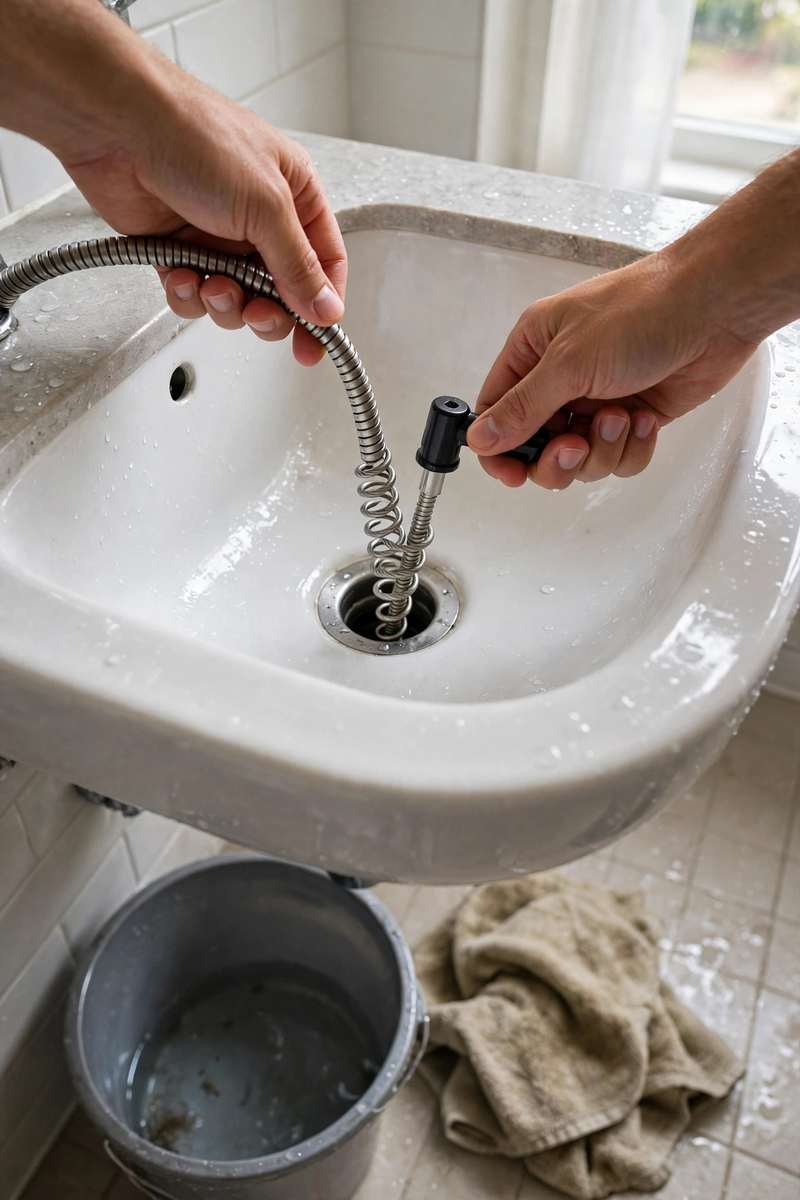
Push the end of the snake slowly into the drain, turning the handle clockwise as you feed it in. When you feel resistance, you have reached the clog. Keep turning gently and push slightly forward; the tip will either break the clog apart or hook it. Pull the snake out slowly, wiping debris into a bucket as it emerges. Flush with hot water and check the flow.
Mistakes to Avoid
- Pouring a chemical cleaner first, then trying to plunge, which splashes caustic liquid
- Mixing chemical cleaners with each other or with vinegar, which can create dangerous fumes
- Using a toilet plunger on a sink, which cannot seal properly and spreads germs
- Plunging without blocking the overflow hole, so all the pressure escapes
- Pouring boiling water into a toilet, which can crack the porcelain
- Forcing a drain snake, which can damage pipes or push the clog deeper
- Repeating the same failed method five times instead of moving to the next one
- Poking at the clog with a wire hanger, which scratches fixtures and pushes debris down
- Ignoring a clog that affects several drains at once, which signals a main-line problem
- Pouring grease down the drain again once it is clear, which starts the next clog
If a method makes things worse, stop. Let everything settle, reassess which kind of clog you have, and try the next method in order rather than doubling down on the one that failed.
How to Prevent the Next Clog
Prevention is easier than any method above. Put a strainer in every sink and shower drain, and empty it regularly; a strainer catches hair and food before they reach the pipe. Wipe grease into the trash with a paper towel instead of rinsing it down the sink, and never pour coffee grounds, rice, pasta, or fibrous food scraps down the drain.
Once a week, run hot water down kitchen drains for a minute after washing greasy dishes, which keeps grease moving instead of letting it settle. Once a month, flush bathroom drains with hot water and clean the strainers.
When to Call a Professional Instead
Call a qualified plumber if several drains clog at once, if sewage or dirty water backs up into your home, if you smell gas or a strong sewer odor, if the clog returns within days of clearing it, or if the drain snake meets a hard obstruction it cannot pass. Also call a professional for very old pipes, water damage under a sink, or a drain still blocked after a chemical cleaner.
A Confident Finish
Most household clogs clear with the first three methods here, and the rest yield to a plunger or a drain snake. Start gentle, work in order, and keep a strainer in place once the water runs free.
If you are setting up your first home, you may also enjoy our beginner repair guide for patching drywall holes. Learn more about who we are on the About page, and if you have a question about a repair or an idea for a future guide, we would love to hear from you through the Contact Us page. For how we handle your information and the limits of educational content, please read our Privacy Policy and Disclaimer pages.